Sunday, October 28, 2012

Evolution of True Tennis Live

Tennis is a game of honor. But when that honor is broken there becomes no trust between the players.  That is why True Tennis Live, an interactive tennis court for average players, is needed to let the competitors know if the ball they hit landed in or out on a debatable situation.

Over the course of this semester, I have been amazed at finding just how much my idea has progressed for the better. I was shocked to find how such a simple idea could become so diverse just by being given information through our IST 195 lectures. The most helpful posts that evolved my idea was the competitive analysis and the hardware. These were so great for me because the research I did and the things I learned in class gave me insight to further the advancement of True Tennis Live.

The competitive analysis post required a lot of work but I am so grateful it was assigned. I found out about two other sports in which both a small company and a huge organization attempted to solve the similar problem of finding where a ball is in respect to the playing field. The small company called "RadarGolf" installed a RFID chip within the ball and whenever the ball went out of site all the searcher had to do is take out their RadarGolf device and scan it around the general area of where it landed. Additionally, the FIFA organization had a similar idea with a chip in the ball and use a magnetic field to tell if the ball goes in the goal. Both these ideas helped me to figure out that I can't be using a GPS chip in the ball because it wouldn't be accurate enough, rather I could use the magnetic field just like FIFA had.

The hardware lecture brought me further insight for my idea's growth. We learned about all the different components of the computer and how they work together efficiently. The most important for my idea was the graphics card. I realized that with using a court side computer to review where the ball physically landed would require a high speed video card so that there is no lag when the viewer is watching and it is very clear where it landed. Also, I now know it would be smart to have these court-side computers secure in the court so that there is no chance of a user attempting to steal any of its equipment.

Over the progression of my idea I also learned how difficult it would be to make this a reality. Given all my ideas and how technologically advanced the courts could become, I realized it could be a very costly project. So I would probably need a big donation from an investor to put toward the courts. I would additionally need to figure out if I wanted to just establish the courts in one facility or franchise it so that it could be used all over the country and completely change the sport of tennis.

Overall, I really enjoyed this first project for IST 195. I truly liked actually getting this idea down on print instead of just having the idea sit in my head because I always felt this technology could be used in tennis courts.Viewing all of the other ideas from my classmates was cool and it is clear we have some very smart people in our class. Hopefully one of our ideas hits it big in the real world and makes a person's dreams into a reality.


Sunday, October 21, 2012

Lecture Post: Networks


                True Tennis Live is the tennis court of the future. This concepts purpose is to turn the classic game of tennis of a game of honor to a game of “truth.” This being because there is no way of getting out of a blown call since the court tells both players whether or not a ball has landed in or out.

                This past week in lecture we learned about networks and how computers are connected to one another. Back in the day many devices were connected in a circuit switching network. This was not a very reliable way of communication because if one circuit were to break the entire path becomes useless. Then ARPANET, the first established internet, communicated four computers from different colleges using a packet switching network. This is what we use today and have been using because of its success.

                These packets that are exchanged must follow protocols in order to work properly. The most well-known protocol, HTTP, is a web protocol that goes by a four step process of linking a user to a web server. First it must make a connection, then it must request the http, next it should establish the connection, and lastly it has to close the connection. Web protocol is actually not the only one of its kind. There are also mail protocols including: POP (post office protocol), IMAP (internet message access protocol), SMTP (simple mail transfer protocol). Two very important parent procedures including TCP (transmission control protocol) and most importantly IP (internet protocol). Every computer has its own IP address which is basically its name.

                Domain names are alias’ for an IP address or any web address. This means it is an easier way of remembering what to search for rather than what your computer looks for which is a set of numbers to connect to a certain server. A number like this can be something like (128.235.162.235). It would take a genius to remember all these different numbers to various websites. This is why we have Domain names like espn.com, yahoo.com, apple.com etc. These websites end in .com which is a unrestricted domain, .net and .org also fall into this category. These unrestricted domains are available for any user to operate. There are also restricted domains including .mil, .edu, and .gov. Networks are essential for internet use and within my idea I would make a website using a .com domain to publish my idea worldwide over the internet with the possibility of having people interested in my technology for their own courts.

Sunday, October 14, 2012

Lecture Post: Operating Systems

Average tennis players need the technology that True Tennis Live offers because it enables them to play games without arguing of whether or not a ball was in or not. With the state of the art tennis courts, players will be told by speakers when a ball lands out of bounds.

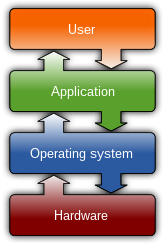
Operating Systems (OS) are probably the most important part of any computer or mobile device because without them we would not have the same smooth experience on them as it is now. The actual function of these systems is a collection of software that manages computer hardware resources and provides common services for computer programs. The experience of interacting with this on devices is called the GUI (Graphical User Interface). The most common operating systems with their founders are Microsoft (Bill Gates), MAC OS X (Steve Jobs), UNIX (Ken Thomson), and Linux (Tinus Torvalds).

There are also many different types of OS' that run various devices in different ways depending on what the user wants out of it. Standalone is a complete OS that works on a desktop computer, laptop, or mobile device (smartphone). This does not require any additional software  for use, just the OS hence the name "Standalone." There is also a Server OS that manages multiple users access with varying levels of security. This type allows virtualization and would probably be seen in an office or school with a lot of computers. The last type of OS is called Embedded which resides on a ROM chip on a mobile device or consumer electronic device.

For my tennis courts, I did plan on using a computer device that would allow the players to log in and keep track of their scores, stats etc. This done incline that I would have to decide on a type of OS I will need to run the hardware on. For all my intents and purposes, I feel the MAC OS X would be the operating system I would use to run on my computers because it is simple and easy to use for the players who probably would be somewhat lost trying to navigate their ways around Linux or UNIX. I would make the software, however, so that it could only be used to run the software of the tennis court (all other applications like the internet would be unable for the user to use). An operating system would definitely benefit my courts because I need it to run the computers I plan to have on the courts.


Sunday, October 7, 2012

Blogger Review

URL of Pro (Emily Price):
http://mashable.com/2012/09/18/ipad-mini-video/

Emily Price is a professional Tech Report blogger for Mashable, where she covers apps, gadgets and news from a San Francisco office. She has experience working in the technology field being a mobile editor at Tecca and contributed to the PC World blog. She also briefly attended graduate school at Harvard University. Her interests are similar to mine because I love the up and coming gadgets just as she does. 

In her blog posted on September 18, 2012, she discusses the possibility of a new product made by Apple called the iPad Mini. She found a video pertaining to a viewing of this new possibly product and discusses the tech specs of it and the chance of this video actually being real or fake. Emily talk of how the leaked pictures of the iPhone 5 were actually held to become true and thinks that it is possible that this video will become a reality also.

I really thought Emily had a very unique blogging style. I really liked the addition of the video because it paints a picture in the readers head of just exactly what she is talking about. The use of questions at the end of her blog like "What do you think?" and "Are these actual pictures of the iPad Mini?" really engage the reader with the text and helps for her to get comments on her material. From viewing this blog, I now know that maybe i should include questions at the end of  my posts so readers feel more connected with my ideas. Overall I was very impressed with her style and think I will keep following her blog in the long run.


Lecture Post: Cloud Computing

The implementation of True Tennis Live will revolutionize tennis matches for average players of all over. Using modern technology this idea will make an interactive tennis court that speaks to the players and tells them when the ball goes out of bounds so that there is never an argument over the point.

This past week in the lectures of IST 195, we discussed an up and coming type of technology called cloud computing. The best way to explain this concept is the use of computing resources (hardware and software) that are delivered as a service over a network (typically the Internet). We need this developing technology today because it allows us to keep storage for ourselves not directly on our own devices but rather in the air. This is also very productive because in the cloud, you only pay for the amount of storage you use up not a random number of space. My idea could be developed around this service to save specific scores of matches in the cloud so that we don't have to take up so much of our own space for storage. 


There are 3 main types of this service: Infrastructure, Platforms, and Software. The infrastructure as a service is a model in which an organization outsources the equipment used to support operations, including storage, hardware, and servers networking components. The service provider owns the equipment and is responsible for housing, running and maintaining it.  Platform as a Service is a way to rent hardware, operating systems, storage and network capacity over the Internet. The service delivery model allows the customer to rent virtualized servers and associated services for running existing applications or developing and testing new ones. The Software component is mostly used by people and is  a software distribution model in which applications are hosted by a vendor or service provider and made available to customers over a network, typically the Internet.

There are many different examples of the different types of cloud computing in our society today. A very popular one is Google docs which allows users to type documents or make up spreadsheets online for free rather than using Microsoft word (an expensive service). Apple also uses iCloud as a service which enables users to backup their information on devices and shares it on other devices owned by the same user. Lastly, Amazon has over 30 different cloud services but the two most popular are Amazon S3 (simple storage service) and Amazon EC2 (elastic computing cloud). There are plenty of other cloud services out today but I find these to be some of the most influential of the assortment.